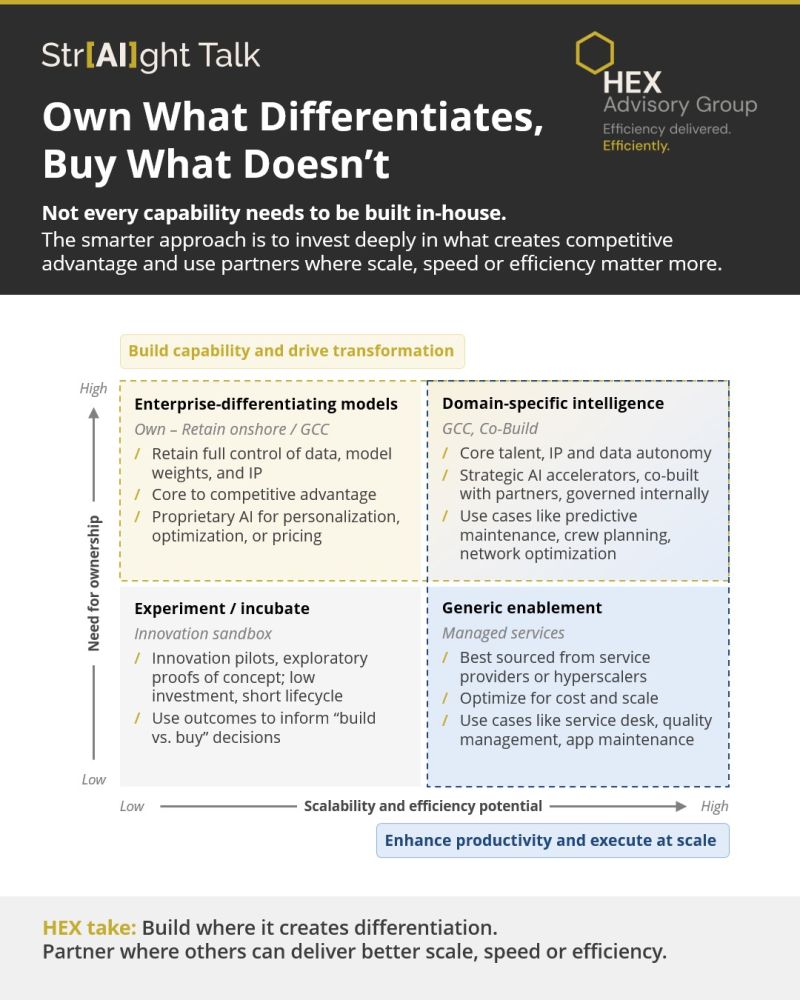
Everyone rolled out AI. Almost nobody redesigned the roles.
Adding an AI layer is not a redesign. If the roles underneath didn’t change, you just bought licenses.
HEXDoodles AI FutureOfWork GCC Sourcing
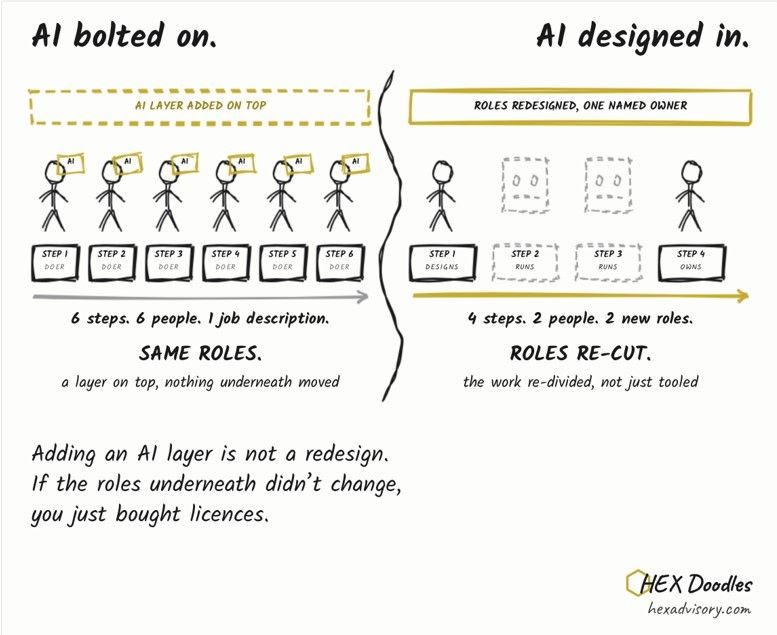
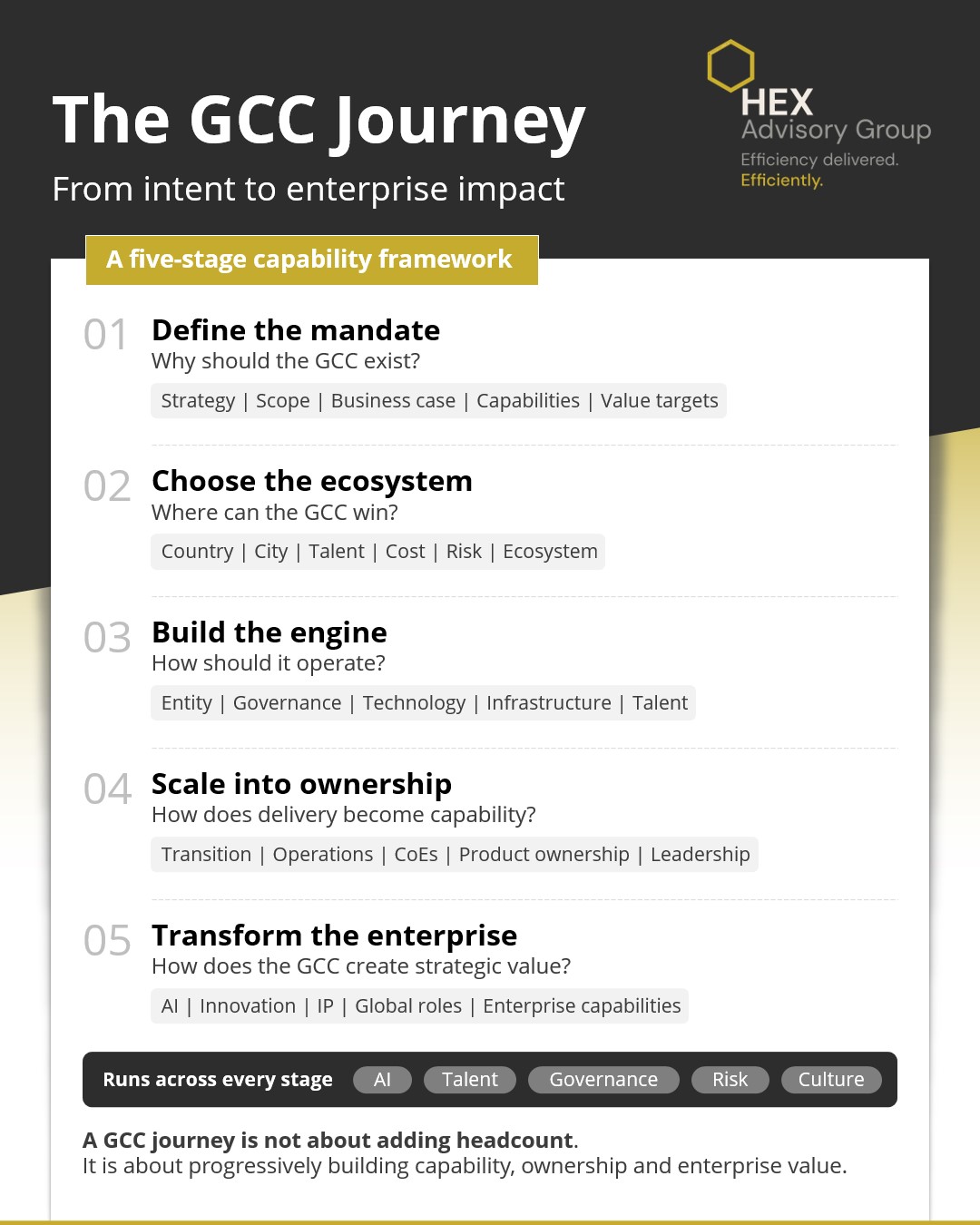
The most important GCC decisions are often made before the GCC exists.
Its strategic intent shapes the mandate. Its mandate shapes the scope. And its scope determines the capabilities it can build.
Our first deep dive into the GCC Lifecycle explores why getting the design right matters long before the GCC begins to scale.
GCC GlobalCapabilityCenters GCCIndia GCCStrategy GCCIntelligence GCCAdvisory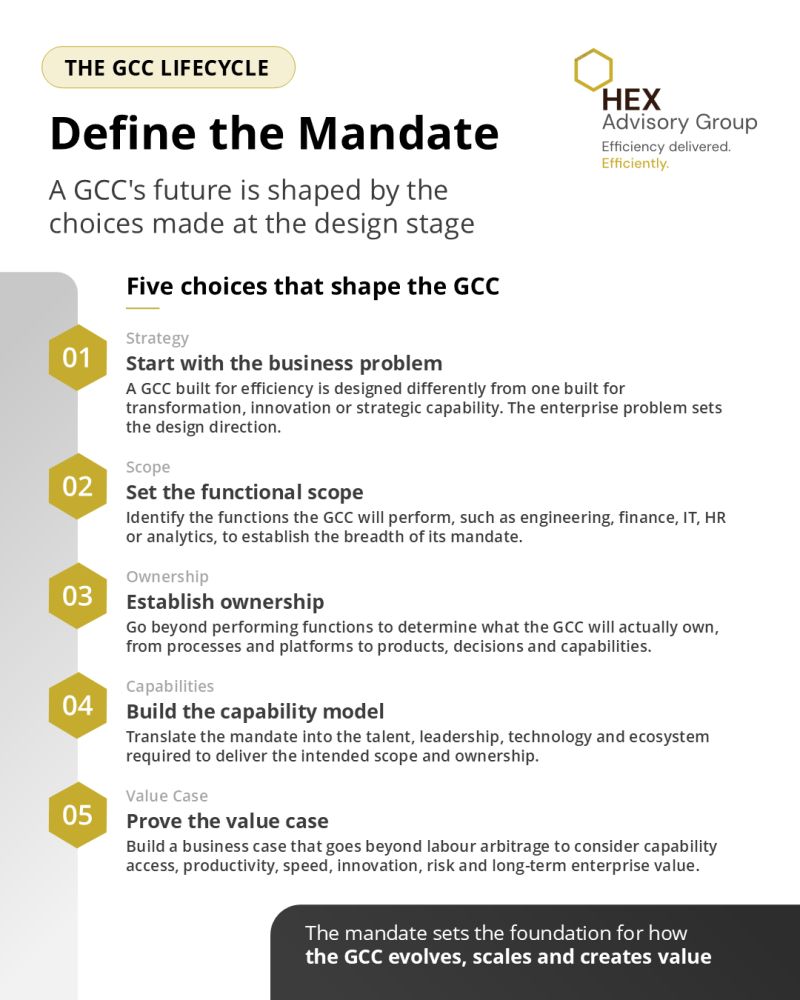
AI is moving from experimentation to execution, with providers increasingly acquiring capabilities that help embed AI into products, platforms and business processes.
The advantage is no longer just having AI expertise; it’s turning that capability into production-ready solutions and measurable business value.
Every GCC follows a lifecycle. But the choices made along the way determine what it becomes.
What shapes those choices?
Where does capability turn into ownership?
And what separates a GCC that creates enterprise value from one that simply adds scale?
We’re taking a closer look at the GCC journey, and the decisions that define it.
This is just the beginning.
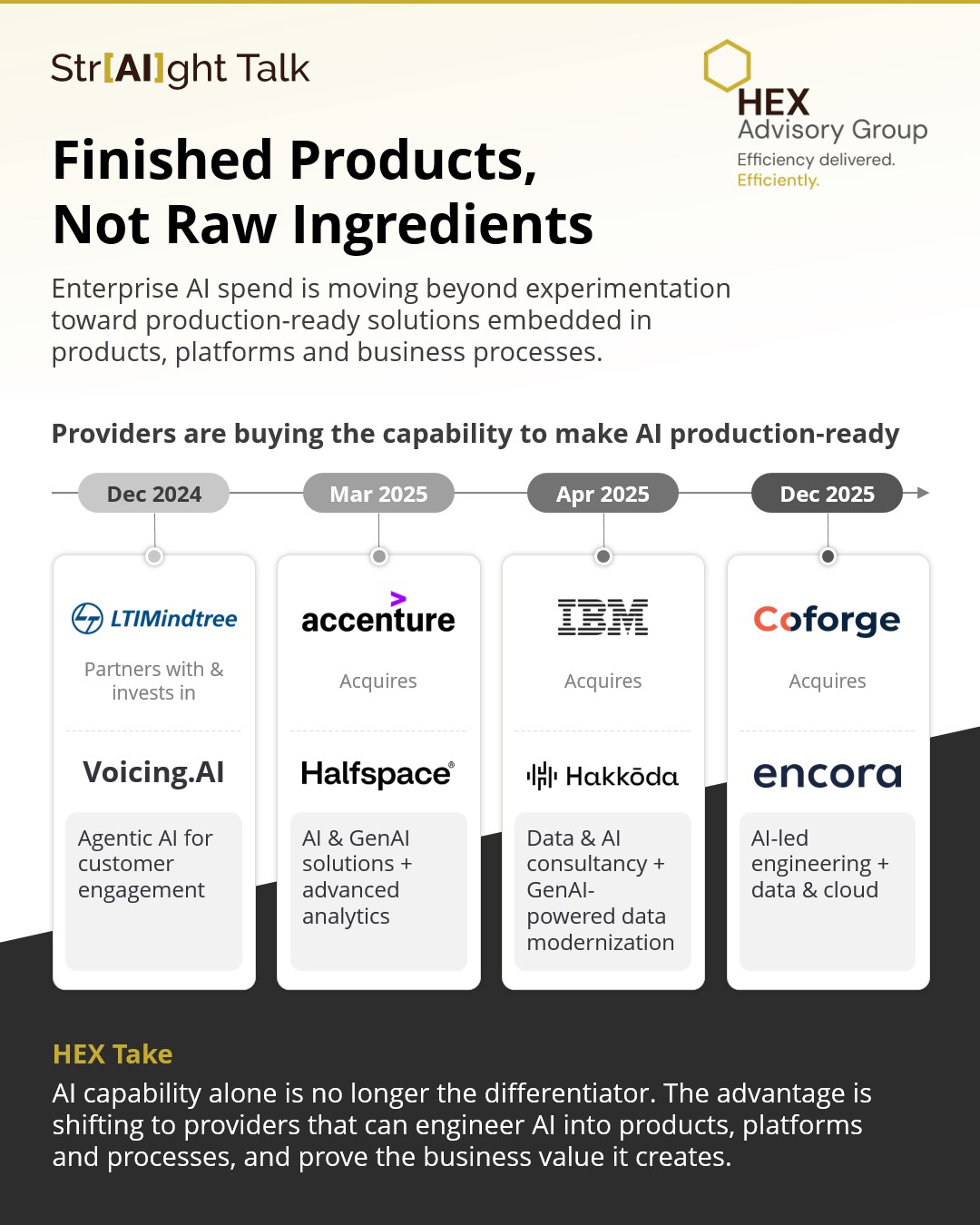
Not every capability needs to be built in-house.
The smarter question is: what should you own, and what should you buy?
The answer depends on where the capability creates differentiation and where scale, speed or efficiency matter more. Build deeply where the capability is core to your competitive advantage. Partner where others can deliver better, faster or at greater scale.
The goal isn’t to build everything yourself. It’s to make deliberate build-vs-buy choices that put investment where it matters most.