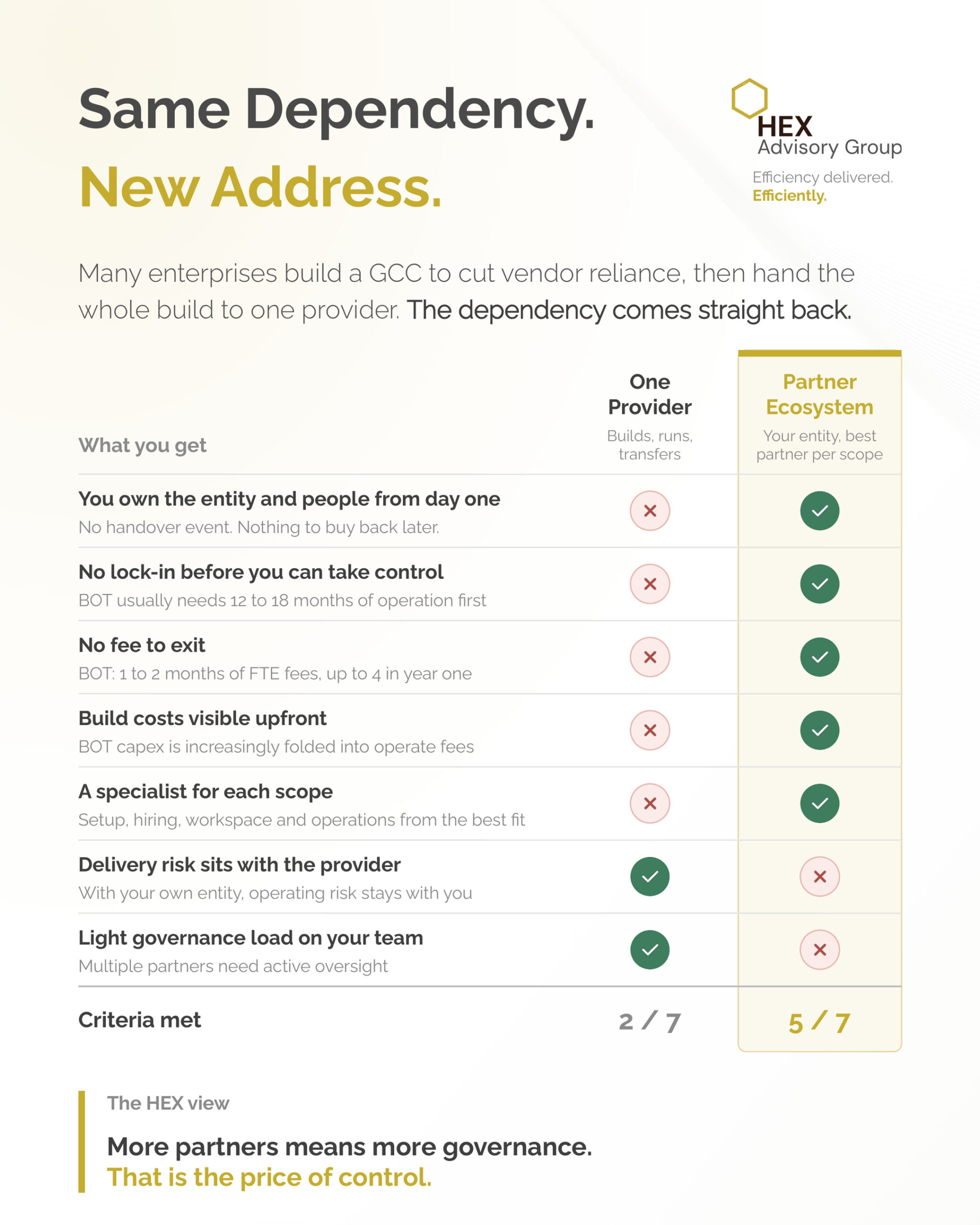
Building a GCC to reduce vendor dependency only works if the operating model doesn’t recreate that same dependency elsewhere. A partner ecosystem can offer greater ownership, flexibility and access to specialised capabilities, but it also brings greater governance responsibilities.
The key is to balance control with the right partner structure.
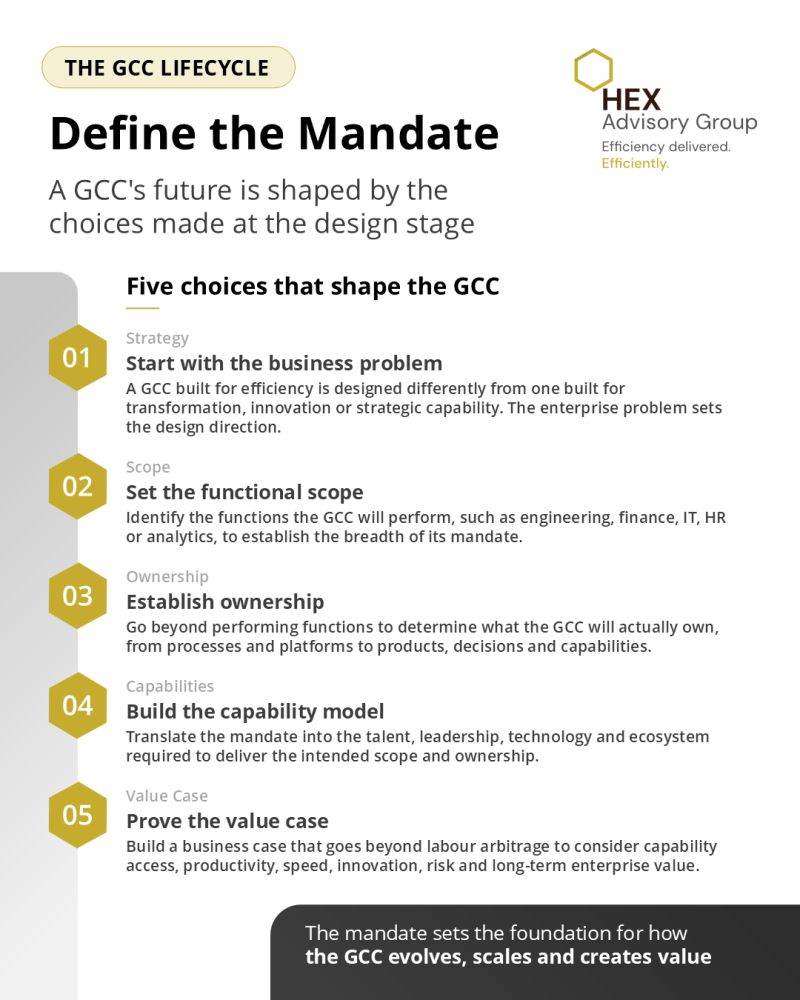
The most important GCC decisions are often made before the GCC exists.
Its strategic intent shapes the mandate. Its mandate shapes the scope. And its scope determines the capabilities it can build.
Our first deep dive into the GCC Lifecycle explores why getting the design right matters long before the GCC begins to scale.
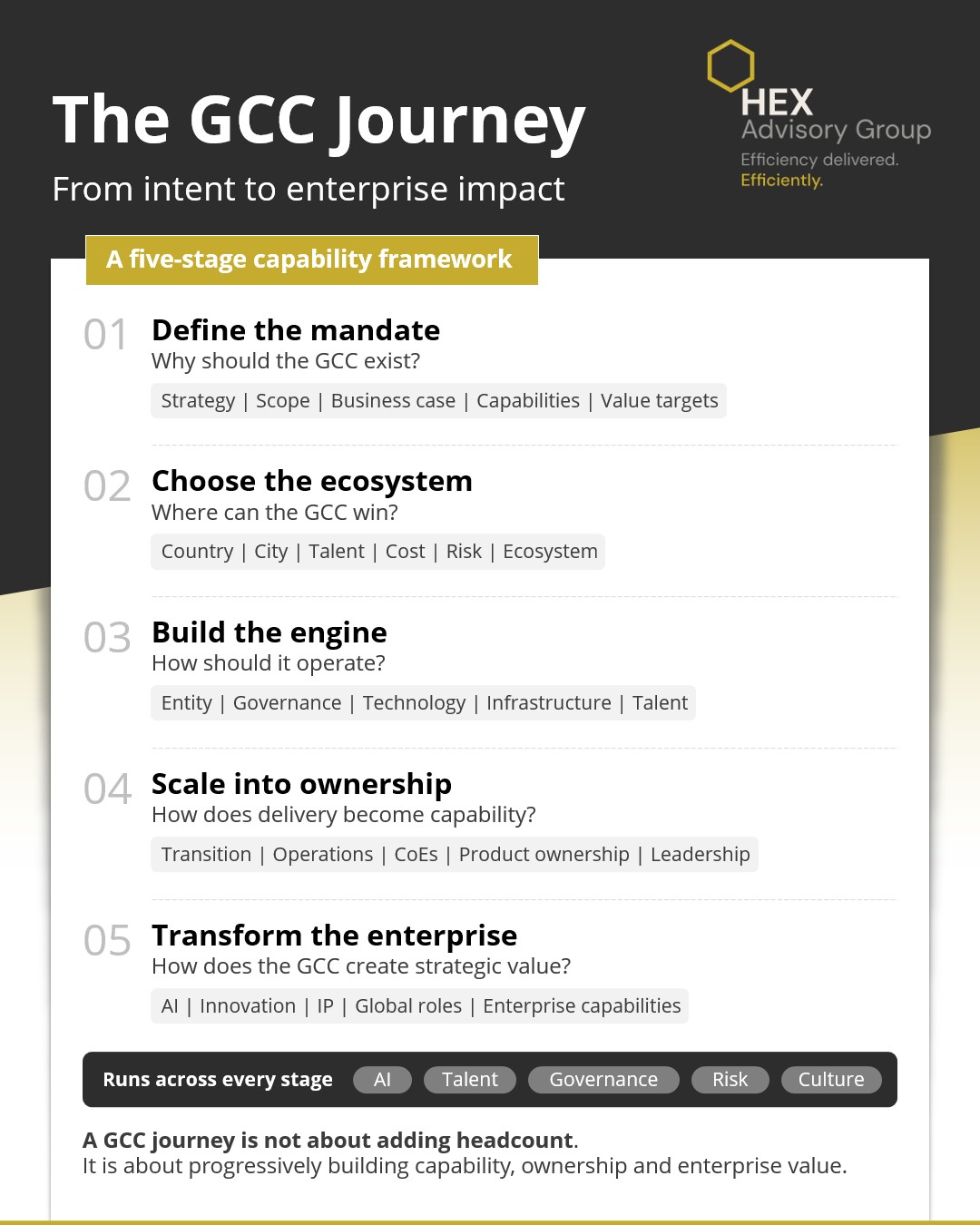
Every GCC follows a lifecycle. But the choices made along the way determine what it becomes.
What shapes those choices?
Where does capability turn into ownership?
And what separates a GCC that creates enterprise value from one that simply adds scale?
We’re taking a closer look at the GCC journey, and the decisions that define it.
This is just the beginning.
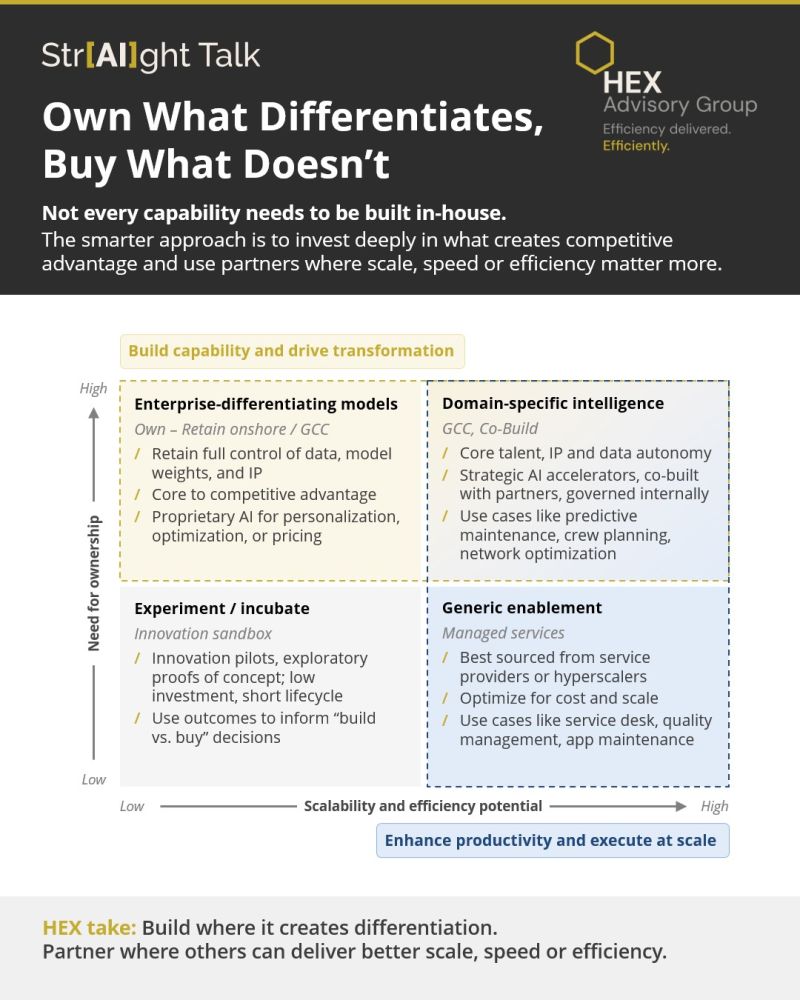
Not every capability needs to be built in-house.
The smarter question is: what should you own, and what should you buy?
The answer depends on where the capability creates differentiation and where scale, speed or efficiency matter more. Build deeply where the capability is core to your competitive advantage. Partner where others can deliver better, faster or at greater scale.
The goal isn’t to build everything yourself. It’s to make deliberate build-vs-buy choices that put investment where it matters most.
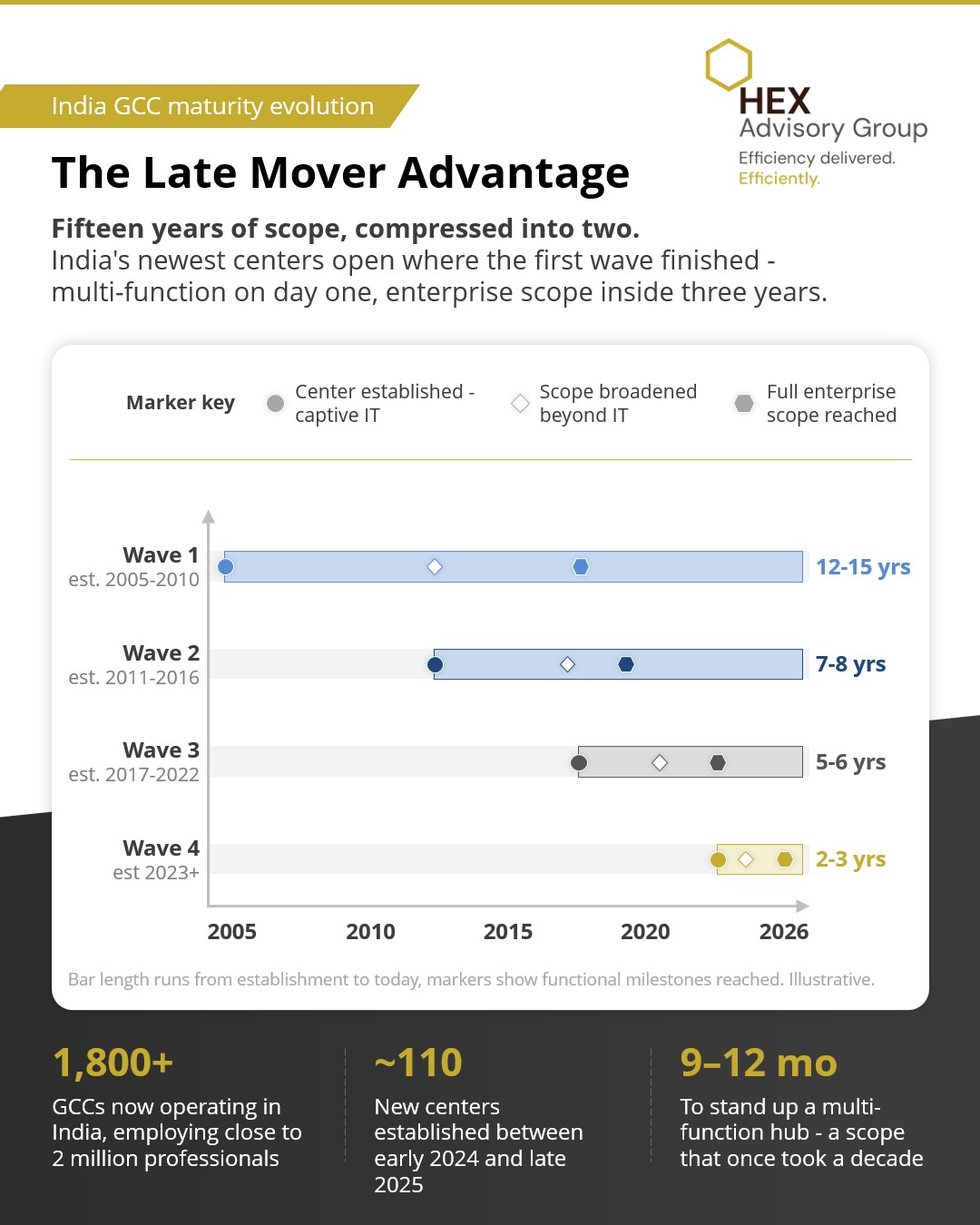
What took India’s first-generation GCCs 12-15 years to achieve can now happen in just 2-3 years.
Newer GCCs are entering the market with broader mandates, moving beyond IT faster, and reaching enterprise-wide scope much earlier. They are benefiting from years of experience and lessons from the first waves, allowing them to compress a journey that once took more than a decade.
For late movers, the advantage is not simply starting later. It is starting smarter.
Your #AIstrategy is quietly becoming a foreign policy decision. This year alone it weighed into three enterprise #ITPortfolioRebalancing Decisions.
AI infrastructure, energy, talent, and platforms are now shaped as much by geopolitics as technology. Another nuanced Str[AI]ghtTalk, packaged succinctly as #HEXExecutiveBrief
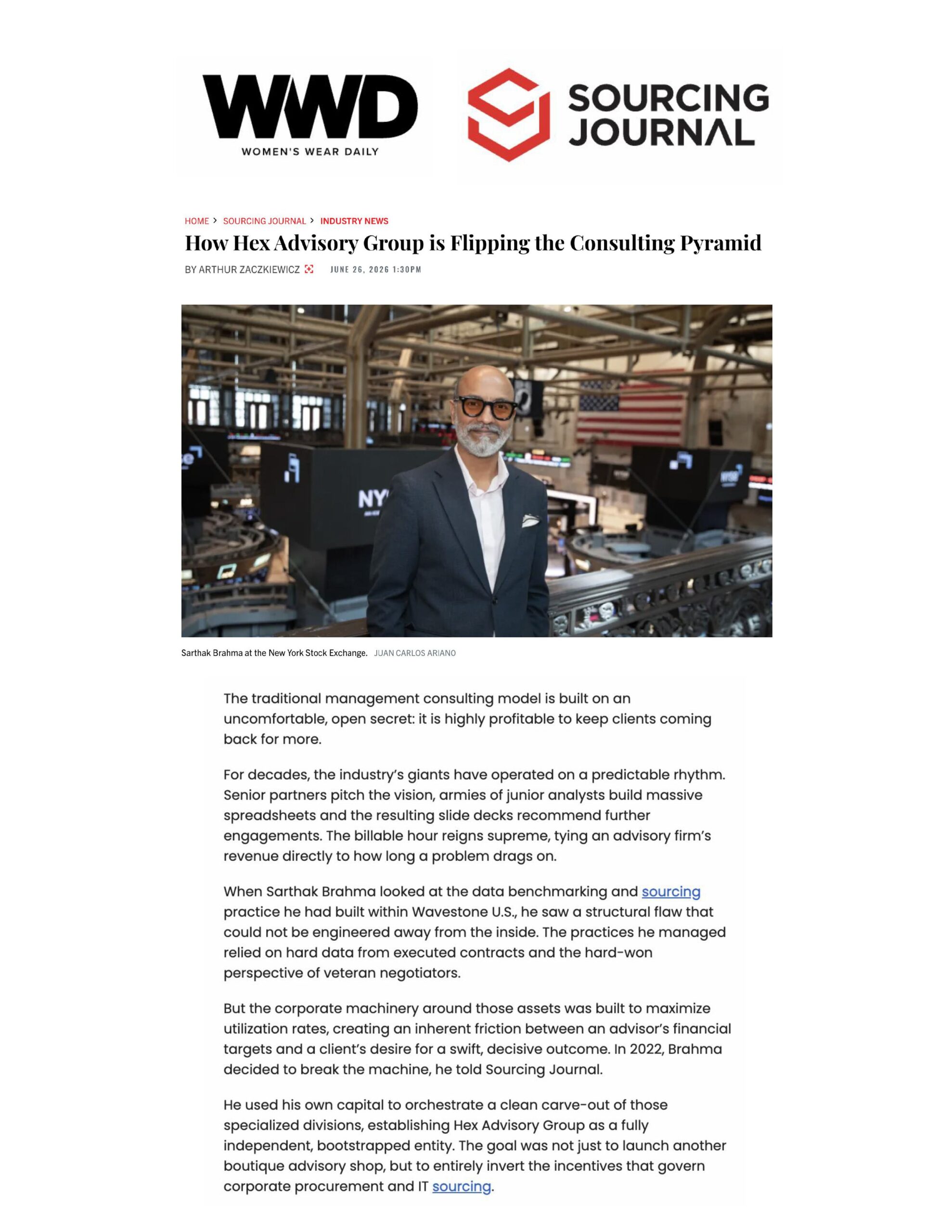
We are proud to share that HEX Advisory Group has been featured in WWD.
The article explores how we are rethinking traditional consulting – combining deep industry expertise, real-time market intelligence, and outcome-driven advisory to help enterprises make better sourcing and GCC decisions.
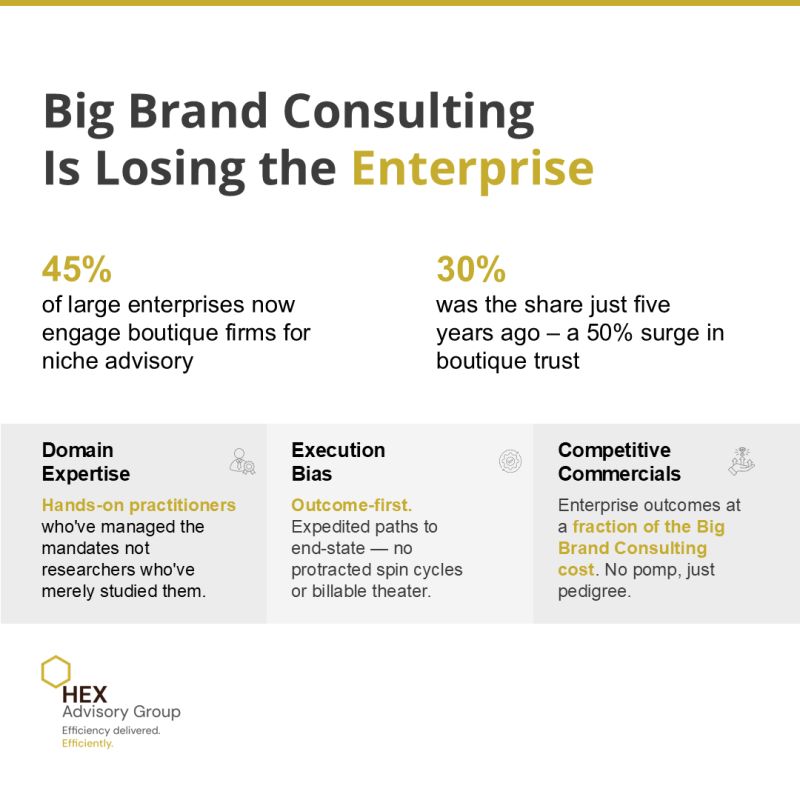
The enterprise consulting landscape is shifting.
Five years ago, 30% of large enterprises engaged boutique firms for niche advisory. Today, that number stands at 45%.
This isn’t a trend. It’s a recalibration.
Enterprises are prioritizing:
• Deep domain operators over generalists
• Execution velocity over presentation cycles
• Measurable outcomes over legacy brand premiums
Transformation today demands precision, accountability, and commercial pragmatism.
At HEX Advisory Group, we work with CXOs who value impact over optics.
If your next mandate requires speed and certainty, let’s talk.
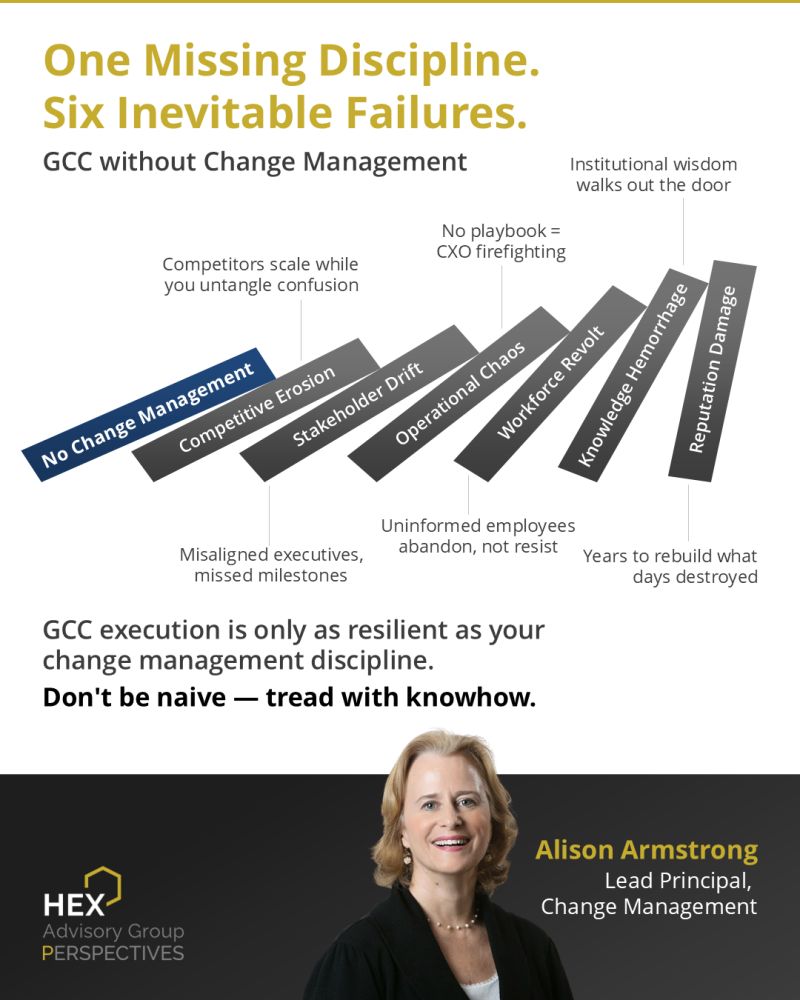
GCC is not a standalone utopia.
It’s the coming together of people, process, and governance — tethered in a clear operating model. And without change management, even the best-architected GCC will crumble from within.
Here’s what we see in failed setups:
→ Competitors gain ground while you’re stuck in internal debates
→ Talent resists, then exits
→ Operations stutter and CXOs scramble
→ Stakeholders lose faith — and funding follows
→ Institutional knowledge evaporates
→ Brand takes hits that PR can’t fix
Reality vs. Rhetoric gap is HUGE in this space.
If you think trends, webinars, and research reports will prepare your enterprise for GCC transformation — you’re wrong. Change management is the new cost of entry.
HEX Advisory Group specializes in hands-on GCC execution with referenceable CXO clients, senior sourcing practitioners like Alison Armstrong, MSM MIS who helped us put together this POV from her experience from her client engagements over the years.
Simply put, 90% of enterprises fail to strategically harness the possibilities of Tech-first (AI-first managed services) and Talent-first (GCC) models. They bluntly squeeze vendors for cost and shift volumes (capacity) to fill up GCCs while calling it “strategy”.
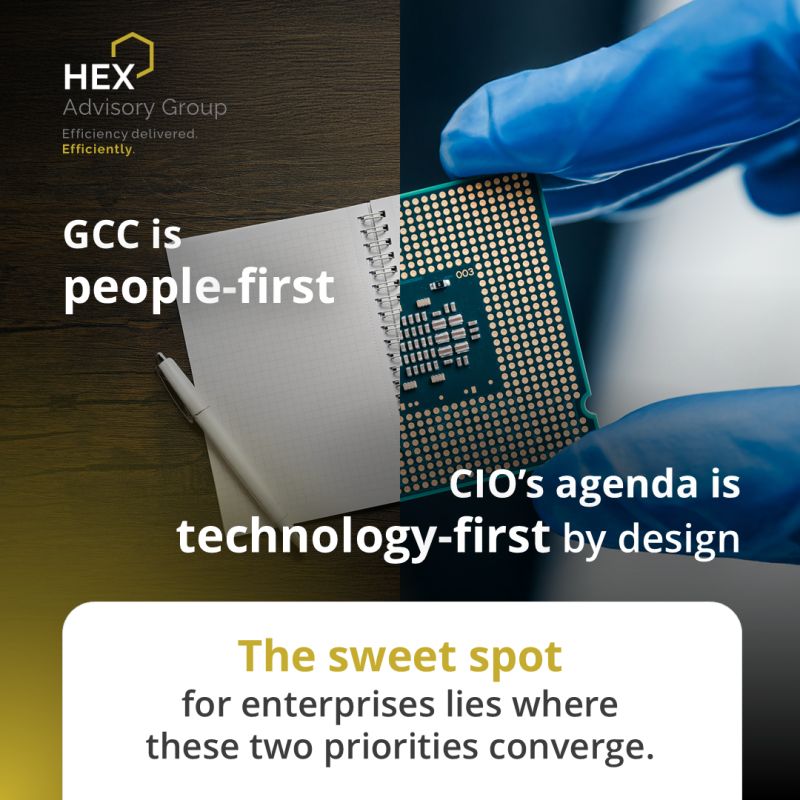
GCCs obsess over people, skills, and operating leverage.
CIOs obsess over platforms, automation, and stability.
Neither is wrong. But value creation accelerates only when both priorities are stitched into a single execution fabric. That’s where enterprises find predictability, scalability, and smarter investment decisions.
This is the new sweet spot: people-first engines powering technology-first mandates.
Tech isn’t just a vendor expense anymore. It’s a core muscle. Smart enterprises aren’t debating outsourced vs in-house. They’re asking what to own and where to build.
The smartest enterprises are now productizing their capabilities and scaling domain expertise as a service, turning GCCs into Growth Drivers, not just Cost Centers.
GCCs are heating up and Service Integration providers are switching the tempo.
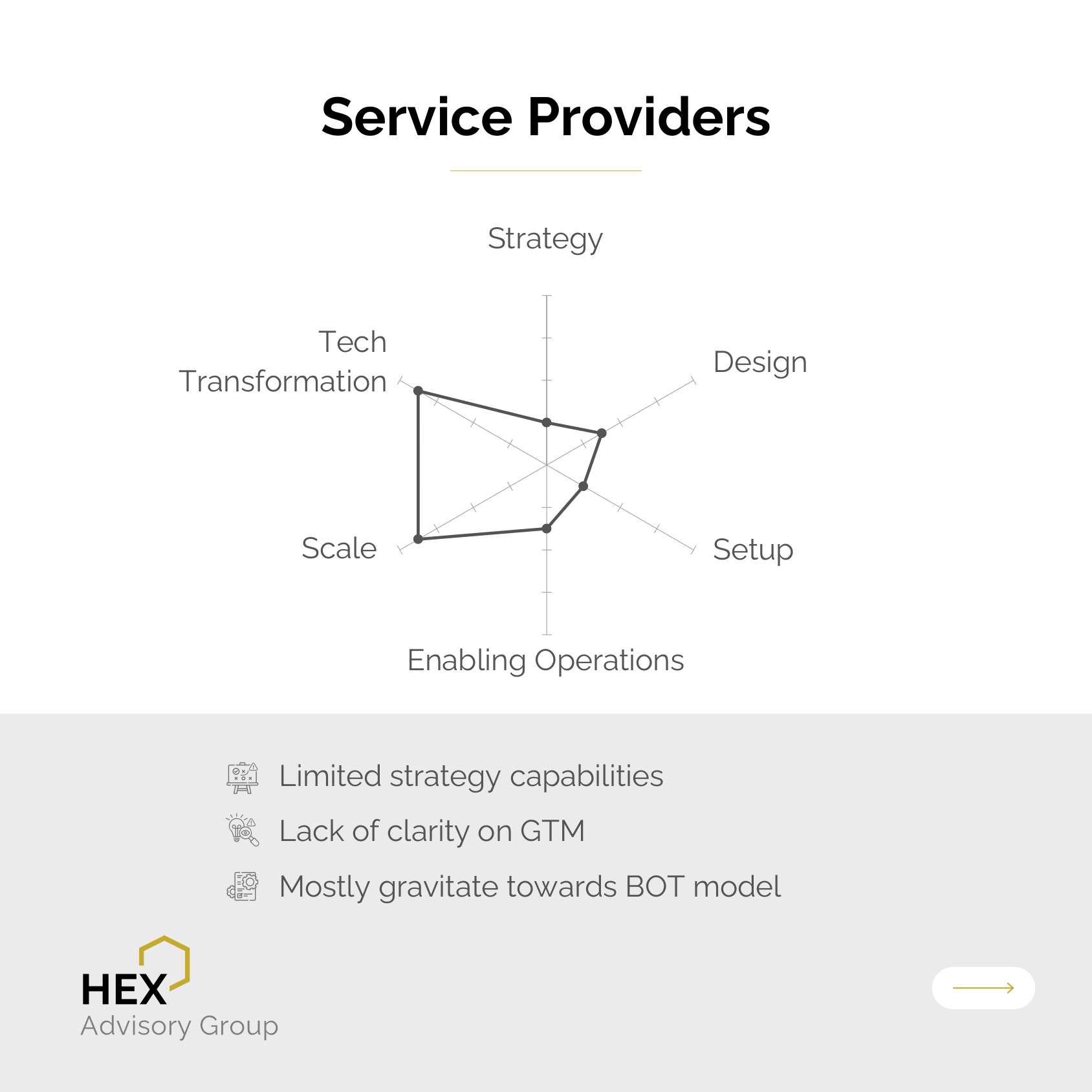
No-more change the face paint to BOT and perpetuate play. Instead SI C-suite are investing in dedicated GCC leadership, specialized M&As, account-based GCC farming, and augmentative solutions.
Building a GCC to reduce vendor dependency only works if the operating model doesn’t recreate that same dependency elsewhere. A partner ecosystem can offer greater ownership, flexibility and access to specialised capabilities, but it also brings greater governance responsibilities.
The key is to balance control with the right partner structure.
The most important GCC decisions are often made before the GCC exists.
Its strategic intent shapes the mandate. Its mandate shapes the scope. And its scope determines the capabilities it can build.
Our first deep dive into the GCC Lifecycle explores why getting the design right matters long before the GCC begins to scale.
Every GCC follows a lifecycle. But the choices made along the way determine what it becomes.
What shapes those choices?
Where does capability turn into ownership?
And what separates a GCC that creates enterprise value from one that simply adds scale?
We’re taking a closer look at the GCC journey, and the decisions that define it.
This is just the beginning.
Not every capability needs to be built in-house.
The smarter question is: what should you own, and what should you buy?
The answer depends on where the capability creates differentiation and where scale, speed or efficiency matter more. Build deeply where the capability is core to your competitive advantage. Partner where others can deliver better, faster or at greater scale.
The goal isn’t to build everything yourself. It’s to make deliberate build-vs-buy choices that put investment where it matters most.
What took India’s first-generation GCCs 12-15 years to achieve can now happen in just 2-3 years.
Newer GCCs are entering the market with broader mandates, moving beyond IT faster, and reaching enterprise-wide scope much earlier. They are benefiting from years of experience and lessons from the first waves, allowing them to compress a journey that once took more than a decade.
For late movers, the advantage is not simply starting later. It is starting smarter.
Your #AIstrategy is quietly becoming a foreign policy decision. This year alone it weighed into three enterprise #ITPortfolioRebalancing Decisions.
AI infrastructure, energy, talent, and platforms are now shaped as much by geopolitics as technology. Another nuanced Str[AI]ghtTalk, packaged succinctly as #HEXExecutiveBrief
We are proud to share that HEX Advisory Group has been featured in WWD.
The article explores how we are rethinking traditional consulting – combining deep industry expertise, real-time market intelligence, and outcome-driven advisory to help enterprises make better sourcing and GCC decisions.
HEX Advisory Group is an independent IT and BPS sourcing advisory and benchmarking firm headquartered in the United States. Founded in 2022 by former leaders of the benchmarking and sourcing practices at Everest Group, WGroup, and Wavestone, HEX provides contract health checks, outsourcing cost optimization, benchmark-led negotiations, and GCC advisory to global enterprises and private equity firms. Our proprietary HEX Index® platform delivers rate and pricing benchmarks derived exclusively from real outsourcing contracts across 50+ global locations.