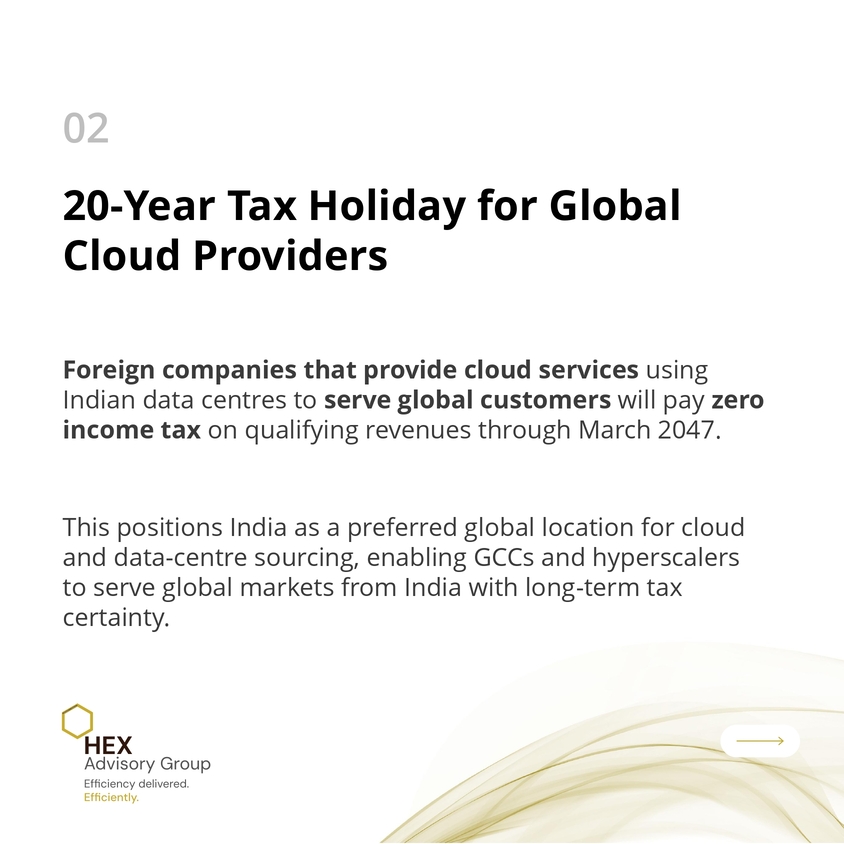
What if policy uncertainty was no longer part of your GCC or cloud strategy?
Budget 2026 quietly removes three friction points:
✔️ Classification ambiguity
✔️ Approval unpredictability
✔️ Long-term tax risk
The result? India positioning itself as a globally competitive, policy-stable hub for GCCs and cloud services.
We’re break down what leaders need to know.
topics
- Advisory Market Lens
- AI
- Benchmarking
- BOT
- COLA
- Contract HealthCheck
- Cost & Run Optimization
- Digital Workplace Services
- F&A
- Field Services
- GCC
- GenAI
- Governance
- Healthcare
- HEX Index
- HRO
- L&D Advisory
- Managed Services
- Network
- Outcome based Pricing
- Outsourcing
- Perspectives
- Pricing Models
- Procurement
- RFP
- Security
- Service Desk
- Service Levels
- WAN
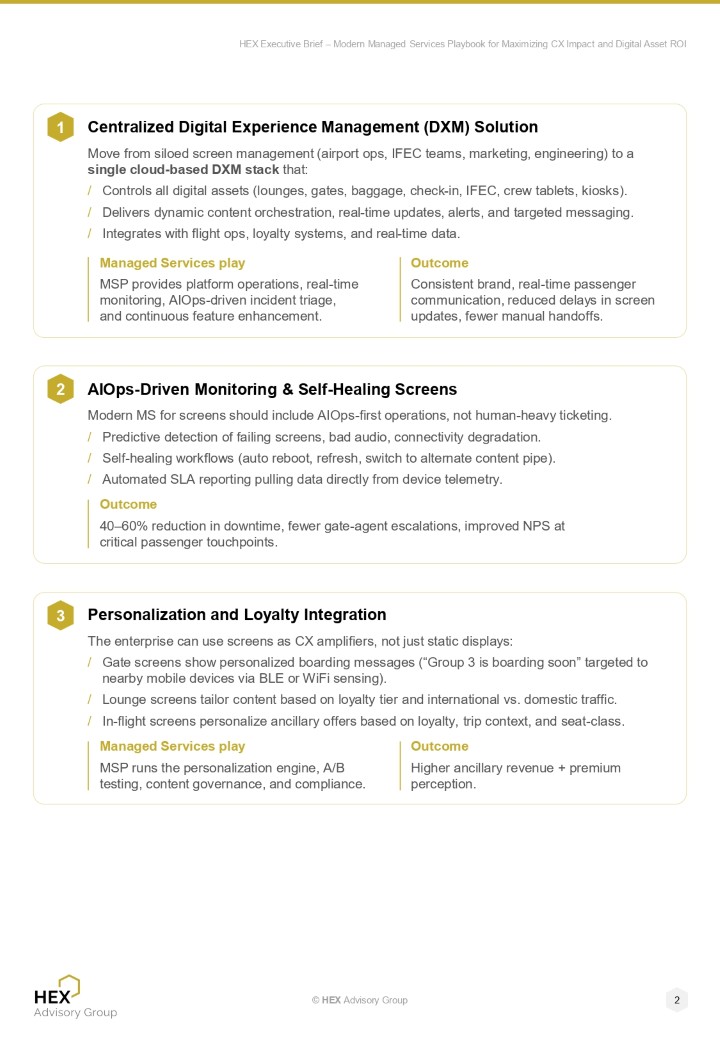
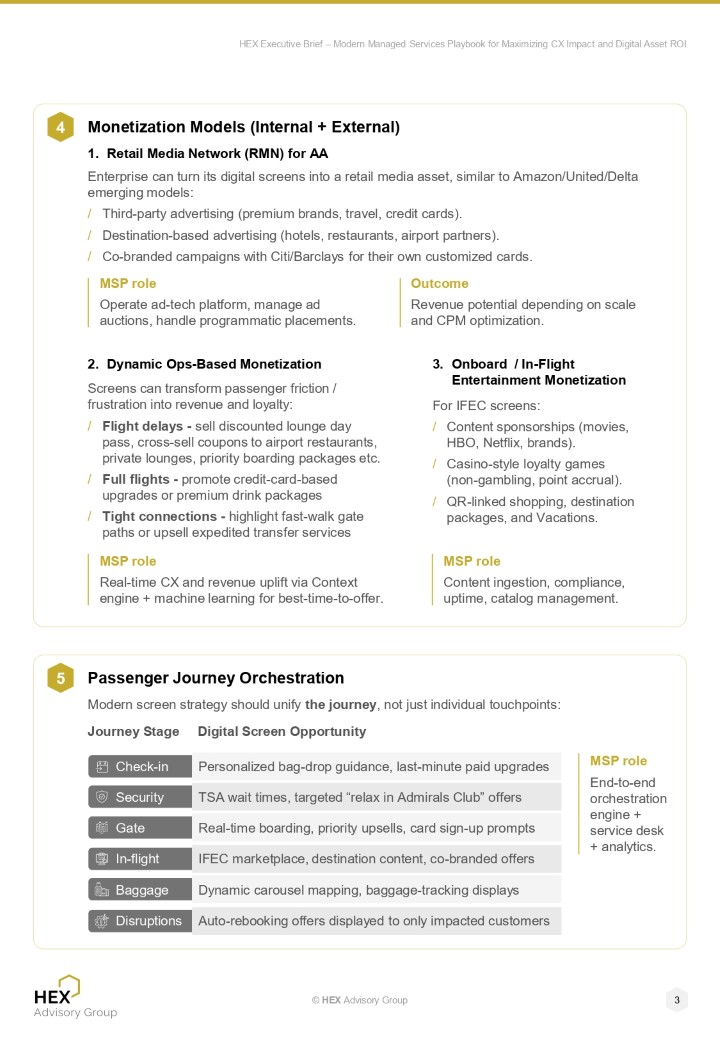
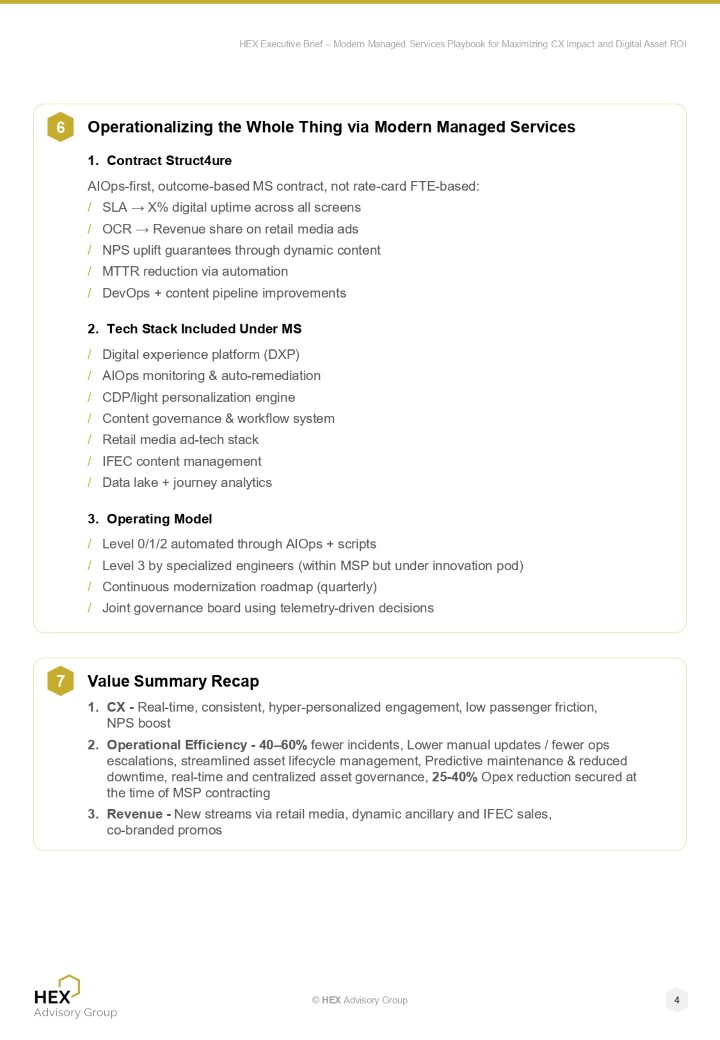
Most of HEX’s 2025 Managed Services engagements focused on Asset Monetization, from incumbency re-solutioning / re-platforming to contract recasting spanning hardware, software, services, and data assets and AIOps.
If your assets aren’t paying their way, it’s time to RETHINK how you manage them.
For more playbooks and perspectives, see:
https://hexadvisory.com/blog/category/perspectives
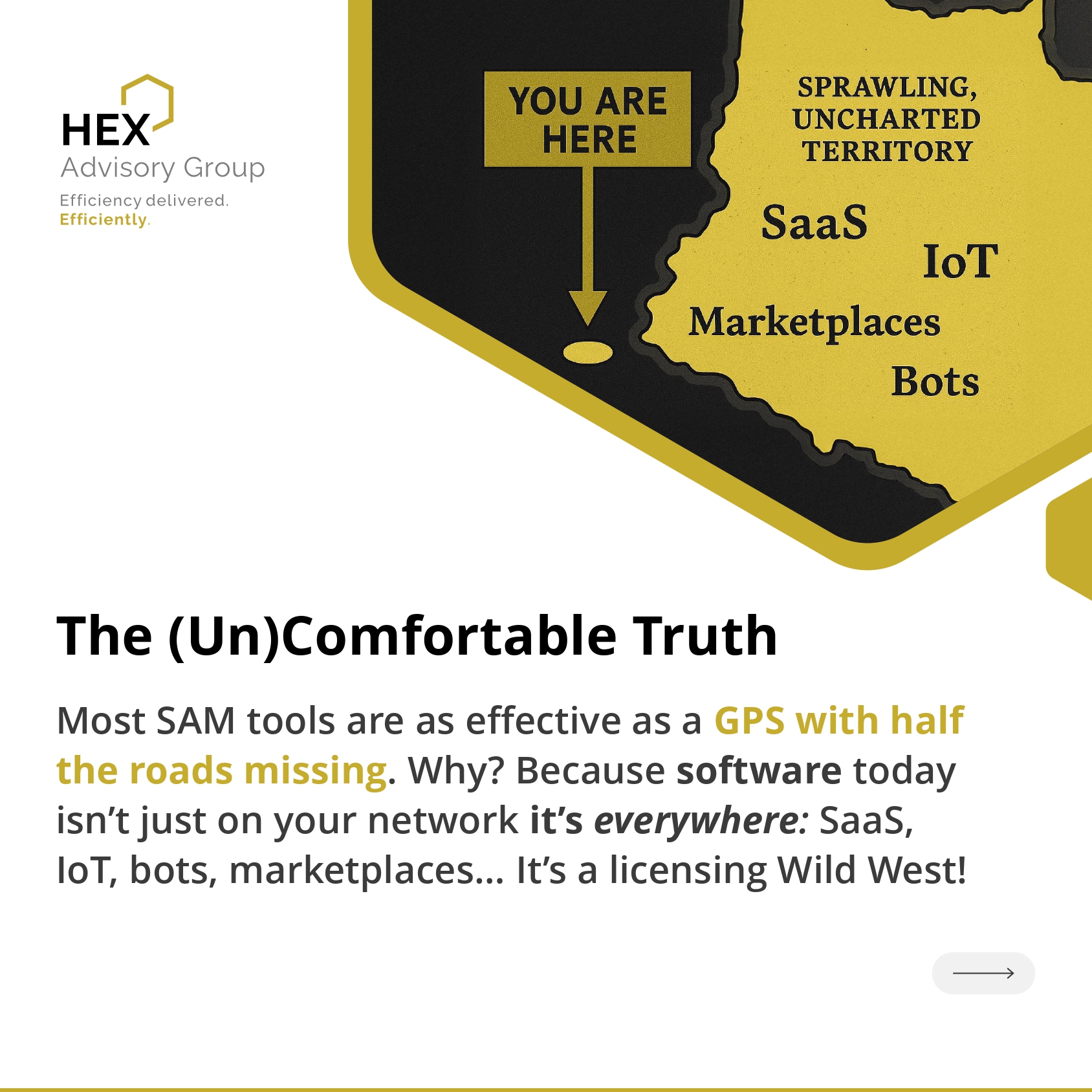
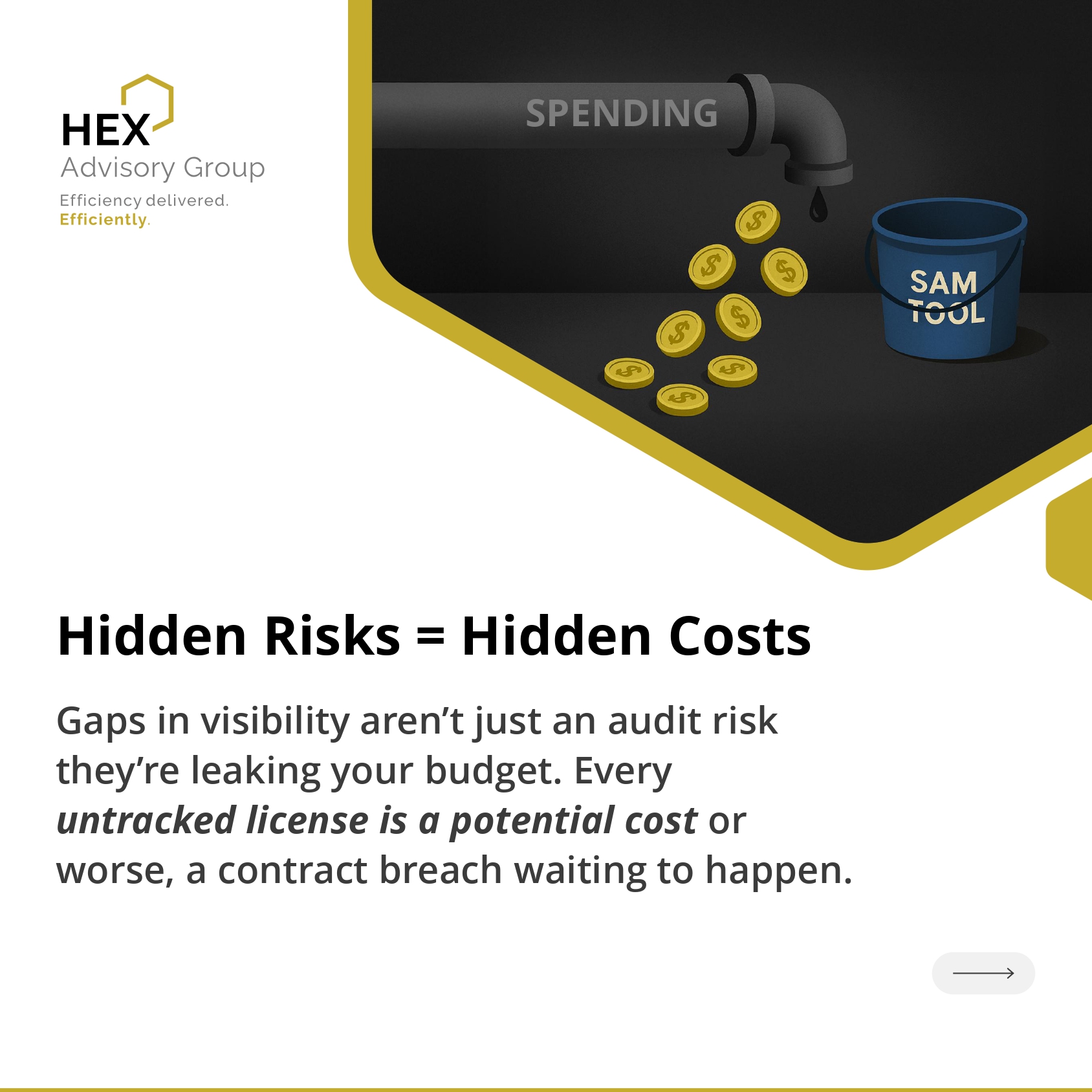
Think your SAM tool covers all the roads? Think again. Time to upgrade your Managed Service Provider into a Managed Service Integrator and master the full map!
Ready to navigate smarter? Let’s talk: https://hexadvisory.com/contact/#mail
Source: LinkedIn
What does control, cost, and compliance look like under different staffing models? This at-a-glance breakdown by HEX gives enterprise leaders a clear view on whether MSP or Staff Augmentation is the smarter choice for their goals.
Hint: It’s not one-size-fits-all.

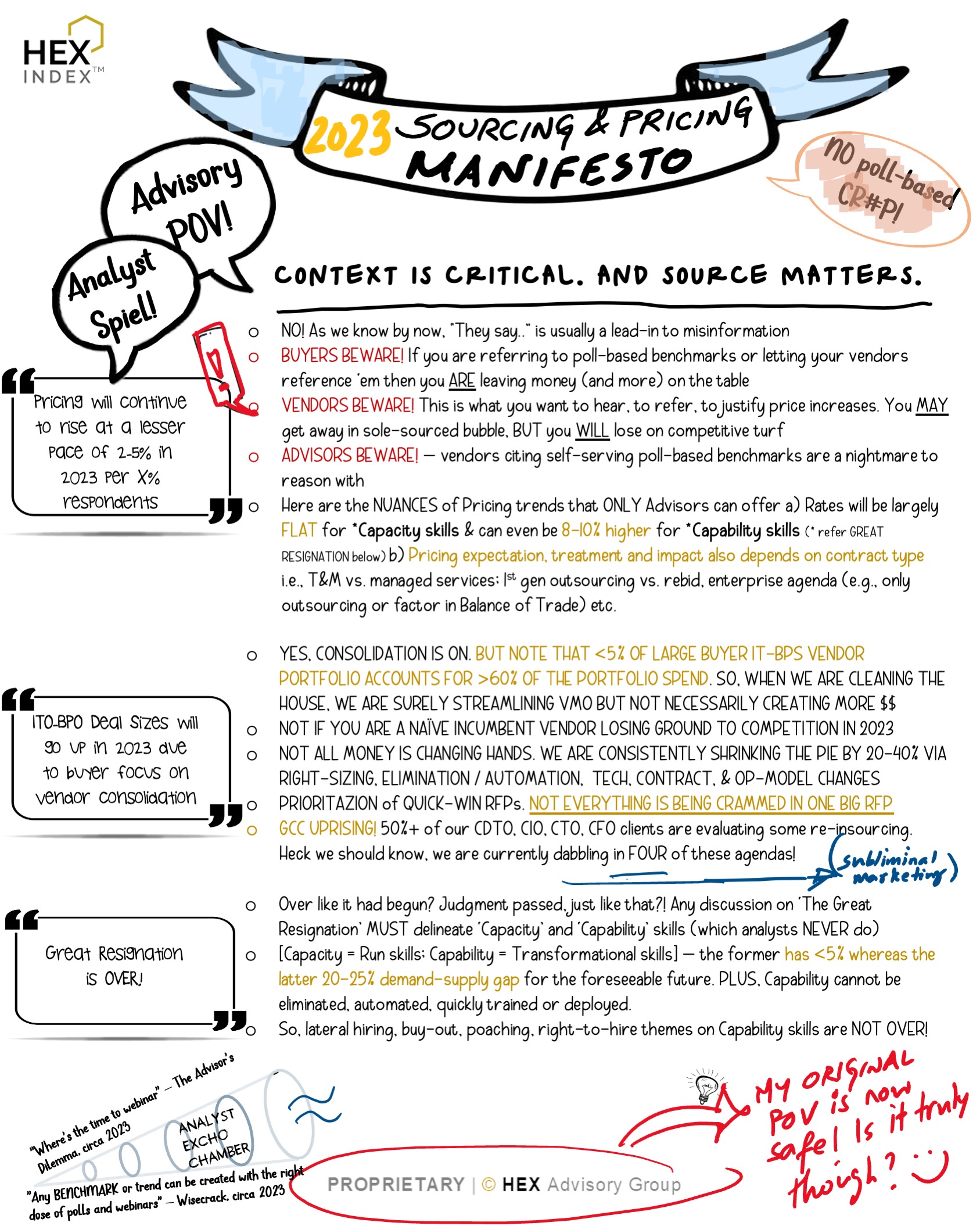
Avoid tacos at 7-Eleven and coffee at Taco Bell. Source matters in everything you consume and that applies to Sourcing and Price Benchmarking trends too.
Don’t ask an advisor what the size of ChatGPT in sourcing deals will be in 2025 and don’t ask a researcher how best to calibrate your multi-million-dollar contracts. You are bound to be misled in either case.
There’s so much broad stroking on IT-BPO Sourcing & Pricing trends going around that I decided not to write a blog post but a MANIFESTO! 🙂
Productivity gains and automation impact over the deal term is driven by environmental maturity.. To assess the potential productivity gains, a detailed analysis of number and nature of issues in the current environment is required. We would typically expect overall productivity gains as well as speed of realizing productivity gains to be higher in a legacy (1st time outsourcing) environment v/s 2nd/ 3rd Generation outsourcing deals.

In managed services contracts, we continue to draft up and get equitable agreement for a 3.0%-3.5% global COLA i.e., applicable to the managed services delivery model incl. the underlying global delivery location portfolio agreed by both parties. The expectation is that the above 3.0-3.5% should be explicitly stated as part of the fee assumptions but needs to be pre-baked into the Y1-Y5 ACV’s i.e., no fee changes during the initial contract term. This incentivizes / encourages the provider to offset COLA against automation-led benefits in the out years, staffing mix and on-offshore mix changes during the contract term etc.
Besides the managed services component, there is typically the project rate card i.e., T&M component in the pricing exhibits. Typically, COLA is applied starting Y3 of the deal & can have higher exposure than managed services COLA i.e., in the 3-5% range depending on skill sets. COLA is subject to the benchmarking clause i.e., if either party wishes to invoke the benchmarking clause to sense-check any significant rate/market changes if the contracted COLA is unacceptable by either party when the need arises
All providers are concerned about the wage inflation, which while real for experienced/lateral hires, needs to be contextualized in the scope of a typical IT-BPS managed services delivery solution. Fact is that the entry-level salaries have remained consistent for the last many years and the same is true even now. Plus, all providers are pushing their entry-level pool to Tier2/3/4 locations and colleges to keep this entry-level cost base consistent, and this is where most providers expect to build 70-80% of their incremental seat capacity esp. with the remote model – most providers have alluded to this in recent quarterly earnings strategies as a margin retention measure. In addition, in a typical delivery AO/IO/BPO pyramid, 75%-80% of the resources are in these bottom two rungs wherein the compensation is being held steady. So, the talent war and the heated 20%-40% wage hikes for experienced hires only applies to 20%-25% of the wage pyramid i.e., 4%-10% net wage increase on a blended wage pyramid. However, wage / compensation is ~50% of a fully loaded offshore rate card (other components being real-estate, telecom/technology, consumables, SG&A, op-margins), therefore, the net offshore rate card impact of blended wage increase is halved to 2%-5%. Now, offshore is typically 80%-90% of the offshore-onshore managed services delivery. Therefore, the net service delivery impact of COLA in a global managed services contract is 2.5%-4.5% and with this rationale we manage to close the agreement at 3.0-3.5% global COLA on equitable and transparent footing.

One still sees so many enterprises locked in long term contracts, punitive termination penalties, proprietary technologies, and inflexible financials. Such relationships are the ones where there is seldom any innovation. The provider sees no additional gains to be made from a client stuck in one’s chair whereas the client sees no reason to invest more resources in a lopsided arrangement – and the relationship plummets.
But in an industry so interconnected and stakeholders so transient, the word gets out. Such troubled accounts become competitive targets and the provider starts losing ground. That’s the thing – a contract can have lock in, word of mouth doesn’t.
-
Categories
- Advisory Market Lens
- AI
- Benchmarking
- BOT
- COLA
- Contract HealthCheck
- Cost & Run Optimization
- Digital Workplace Services
- F&A
- Field Services
- GCC
- GenAI
- Governance
- Healthcare
- HEX Index
- HRO
- L&D Advisory
- Managed Services
- Network
- Outcome based Pricing
- Outsourcing
- Perspectives
- Pricing Models
- Procurement
- RFP
- Security
- Service Desk
- Service Levels
- WAN
What if policy uncertainty was no longer part of your GCC or cloud strategy?
Budget 2026 quietly removes three friction points:
✔️ Classification ambiguity
✔️ Approval unpredictability
✔️ Long-term tax risk
The result? India positioning itself as a globally competitive, policy-stable hub for GCCs and cloud services.
We’re break down what leaders need to know.
Most of HEX’s 2025 Managed Services engagements focused on Asset Monetization, from incumbency re-solutioning / re-platforming to contract recasting spanning hardware, software, services, and data assets and AIOps.
If your assets aren’t paying their way, it’s time to RETHINK how you manage them.
For more playbooks and perspectives, see:
https://hexadvisory.com/blog/category/perspectives
Think your SAM tool covers all the roads? Think again. Time to upgrade your Managed Service Provider into a Managed Service Integrator and master the full map!
Ready to navigate smarter? Let’s talk: https://hexadvisory.com/contact/#mail
Source: LinkedIn
What does control, cost, and compliance look like under different staffing models? This at-a-glance breakdown by HEX gives enterprise leaders a clear view on whether MSP or Staff Augmentation is the smarter choice for their goals.
Hint: It’s not one-size-fits-all.

Avoid tacos at 7-Eleven and coffee at Taco Bell. Source matters in everything you consume and that applies to Sourcing and Price Benchmarking trends too.
Don’t ask an advisor what the size of ChatGPT in sourcing deals will be in 2025 and don’t ask a researcher how best to calibrate your multi-million-dollar contracts. You are bound to be misled in either case.
There’s so much broad stroking on IT-BPO Sourcing & Pricing trends going around that I decided not to write a blog post but a MANIFESTO! 🙂
Productivity gains and automation impact over the deal term is driven by environmental maturity.. To assess the potential productivity gains, a detailed analysis of number and nature of issues in the current environment is required. We would typically expect overall productivity gains as well as speed of realizing productivity gains to be higher in a legacy (1st time outsourcing) environment v/s 2nd/ 3rd Generation outsourcing deals.

In managed services contracts, we continue to draft up and get equitable agreement for a 3.0%-3.5% global COLA i.e., applicable to the managed services delivery model incl. the underlying global delivery location portfolio agreed by both parties. The expectation is that the above 3.0-3.5% should be explicitly stated as part of the fee assumptions but needs to be pre-baked into the Y1-Y5 ACV’s i.e., no fee changes during the initial contract term. This incentivizes / encourages the provider to offset COLA against automation-led benefits in the out years, staffing mix and on-offshore mix changes during the contract term etc.
Besides the managed services component, there is typically the project rate card i.e., T&M component in the pricing exhibits. Typically, COLA is applied starting Y3 of the deal & can have higher exposure than managed services COLA i.e., in the 3-5% range depending on skill sets. COLA is subject to the benchmarking clause i.e., if either party wishes to invoke the benchmarking clause to sense-check any significant rate/market changes if the contracted COLA is unacceptable by either party when the need arises
All providers are concerned about the wage inflation, which while real for experienced/lateral hires, needs to be contextualized in the scope of a typical IT-BPS managed services delivery solution. Fact is that the entry-level salaries have remained consistent for the last many years and the same is true even now. Plus, all providers are pushing their entry-level pool to Tier2/3/4 locations and colleges to keep this entry-level cost base consistent, and this is where most providers expect to build 70-80% of their incremental seat capacity esp. with the remote model – most providers have alluded to this in recent quarterly earnings strategies as a margin retention measure. In addition, in a typical delivery AO/IO/BPO pyramid, 75%-80% of the resources are in these bottom two rungs wherein the compensation is being held steady. So, the talent war and the heated 20%-40% wage hikes for experienced hires only applies to 20%-25% of the wage pyramid i.e., 4%-10% net wage increase on a blended wage pyramid. However, wage / compensation is ~50% of a fully loaded offshore rate card (other components being real-estate, telecom/technology, consumables, SG&A, op-margins), therefore, the net offshore rate card impact of blended wage increase is halved to 2%-5%. Now, offshore is typically 80%-90% of the offshore-onshore managed services delivery. Therefore, the net service delivery impact of COLA in a global managed services contract is 2.5%-4.5% and with this rationale we manage to close the agreement at 3.0-3.5% global COLA on equitable and transparent footing.
One still sees so many enterprises locked in long term contracts, punitive termination penalties, proprietary technologies, and inflexible financials. Such relationships are the ones where there is seldom any innovation. The provider sees no additional gains to be made from a client stuck in one’s chair whereas the client sees no reason to invest more resources in a lopsided arrangement – and the relationship plummets.
But in an industry so interconnected and stakeholders so transient, the word gets out. Such troubled accounts become competitive targets and the provider starts losing ground. That’s the thing – a contract can have lock in, word of mouth doesn’t.