

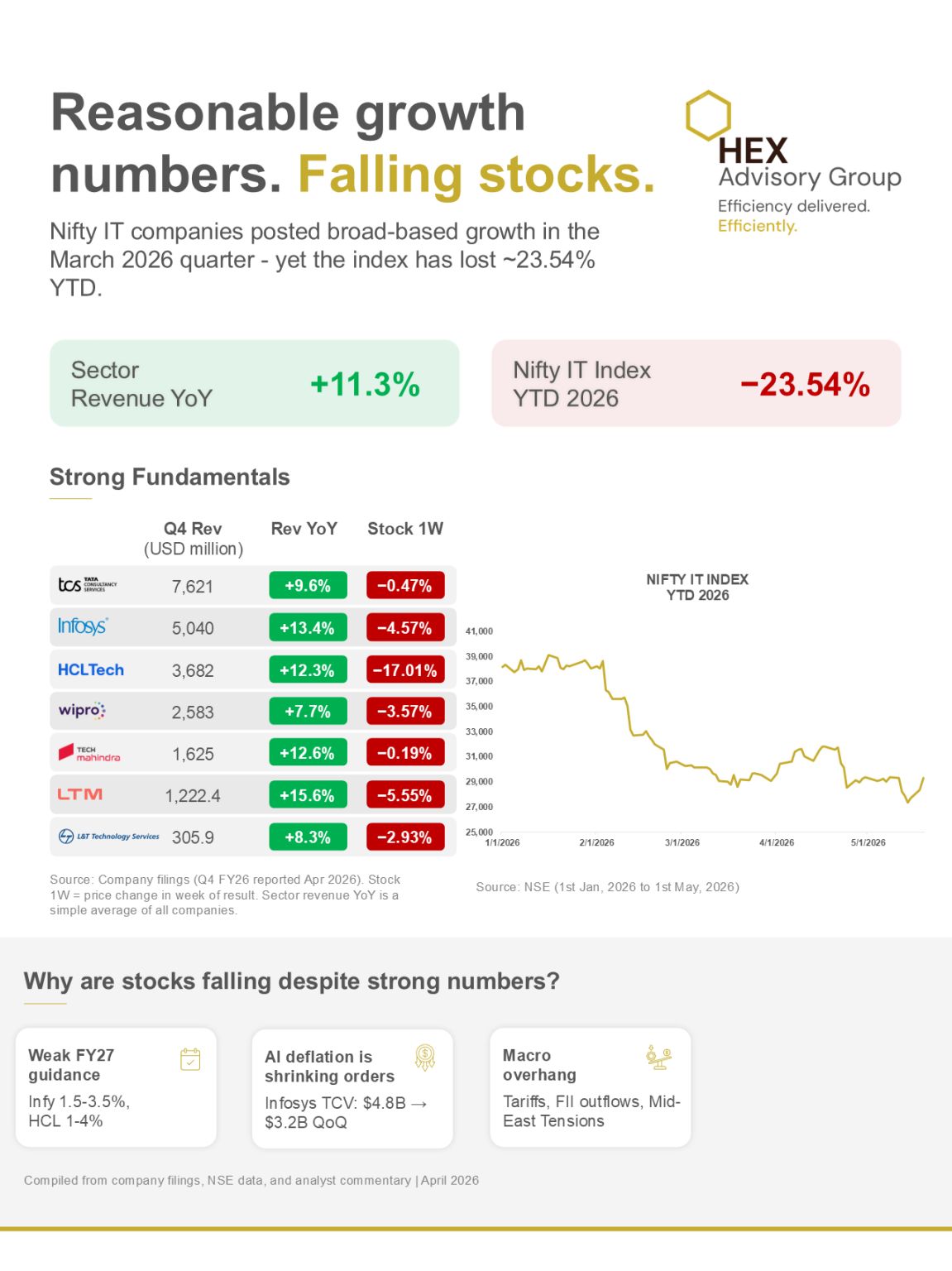
Despite strong topline growth, IT stocks continue to face pressure from weaker guidance, AI-led pricing shifts, and macro uncertainty. The disconnect between fundamentals and sentiment is shaping a new market reality.
#ITServices #MarketIntelligence #StockMarket #AI

We are proud to share that HEX Advisory Group has been featured in WWD.
The article explores how we are rethinking traditional consulting – combining deep industry expertise, real-time market intelligence, and outcome-driven advisory to help enterprises make better sourcing and GCC decisions.
Read the full article here.
#HEXAdvisory #Sourcing #GCC #Procurement #BusinessTransformation #Consulting
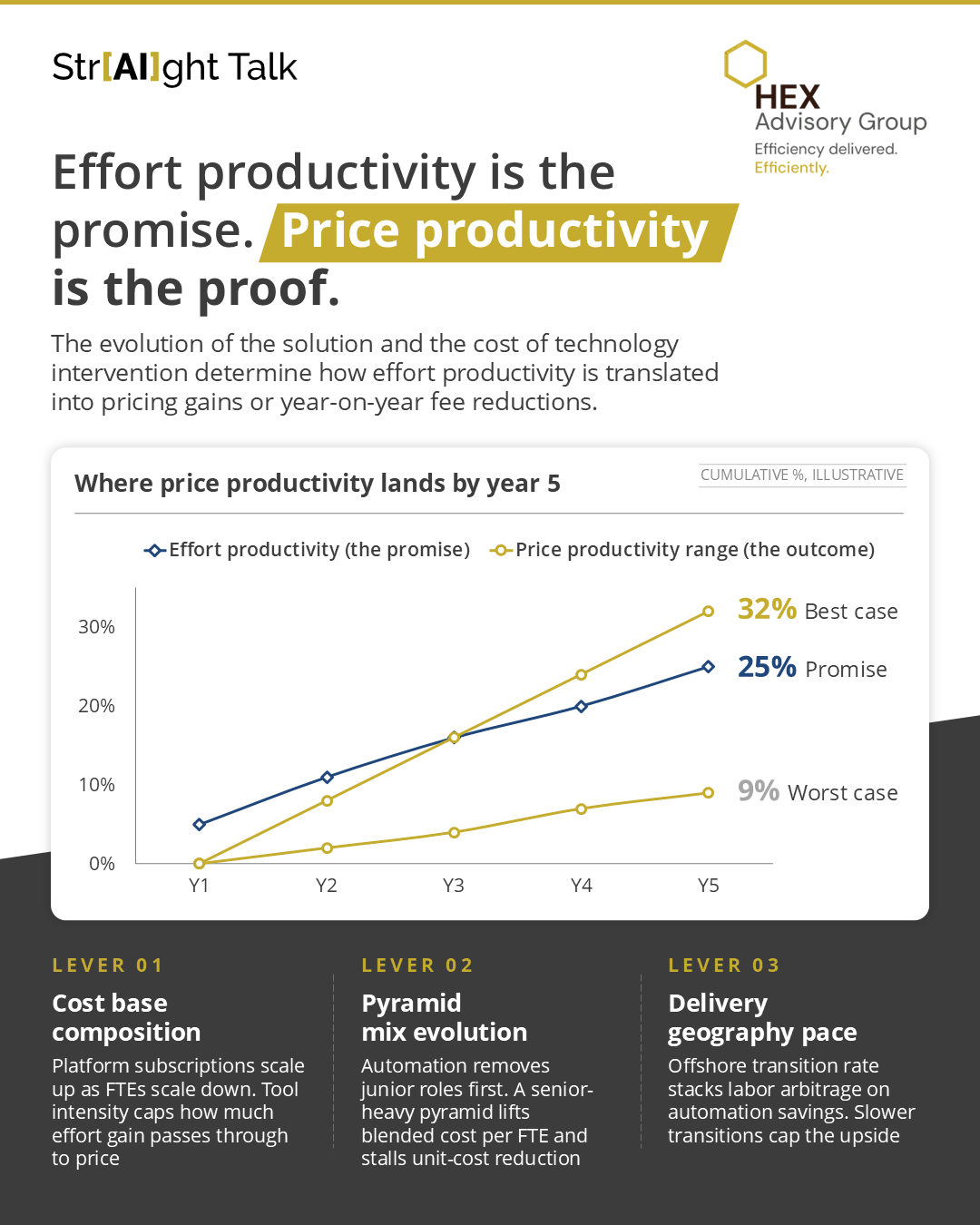
The objective isn’t lower effort. It’s stronger economics.
Technology investments, automation, and delivery decisions create value only when they improve the price curve over time. That’s the difference between operational efficiency and commercial advantage.
#PriceProductivity #CostOptimization #Sourcing #Benchmarking #HEXIndex
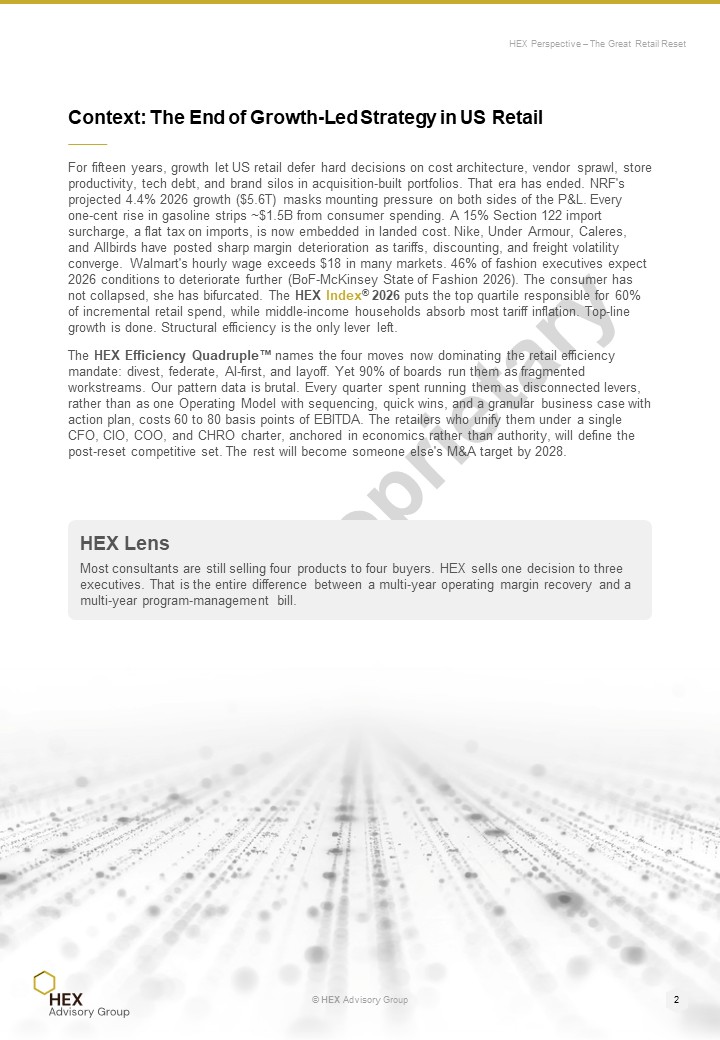
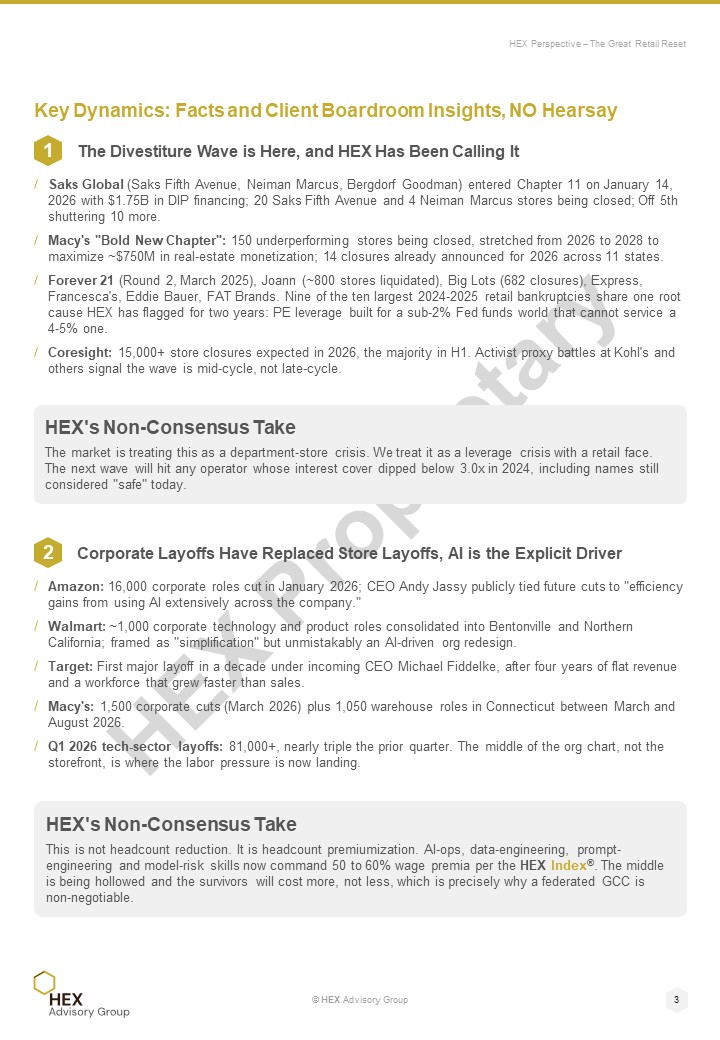
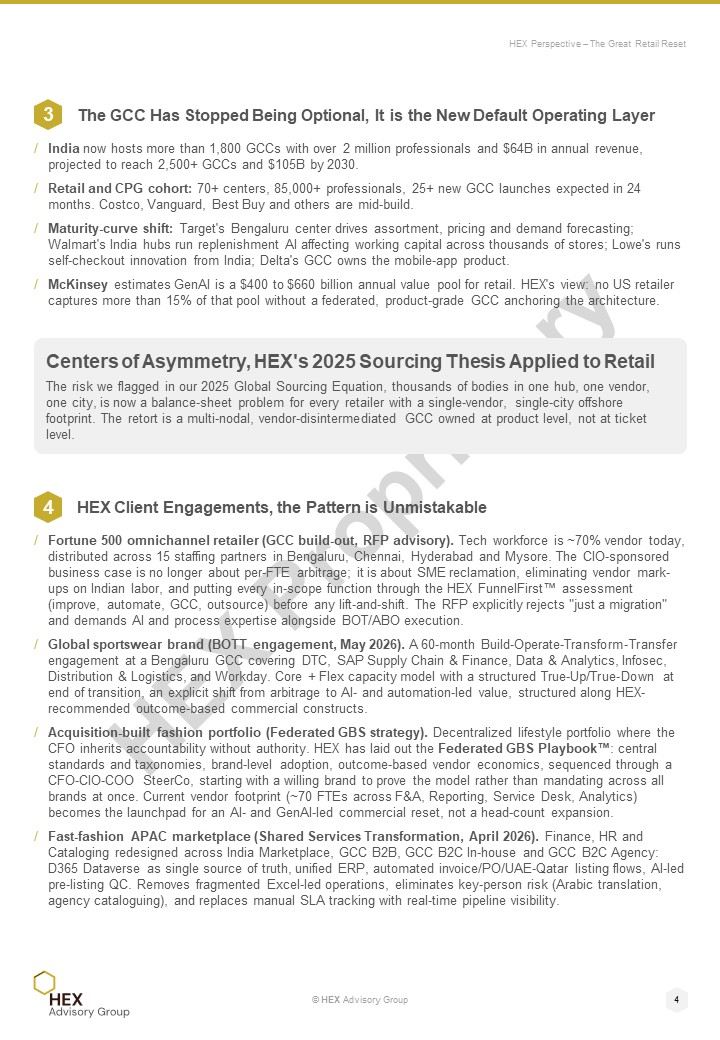
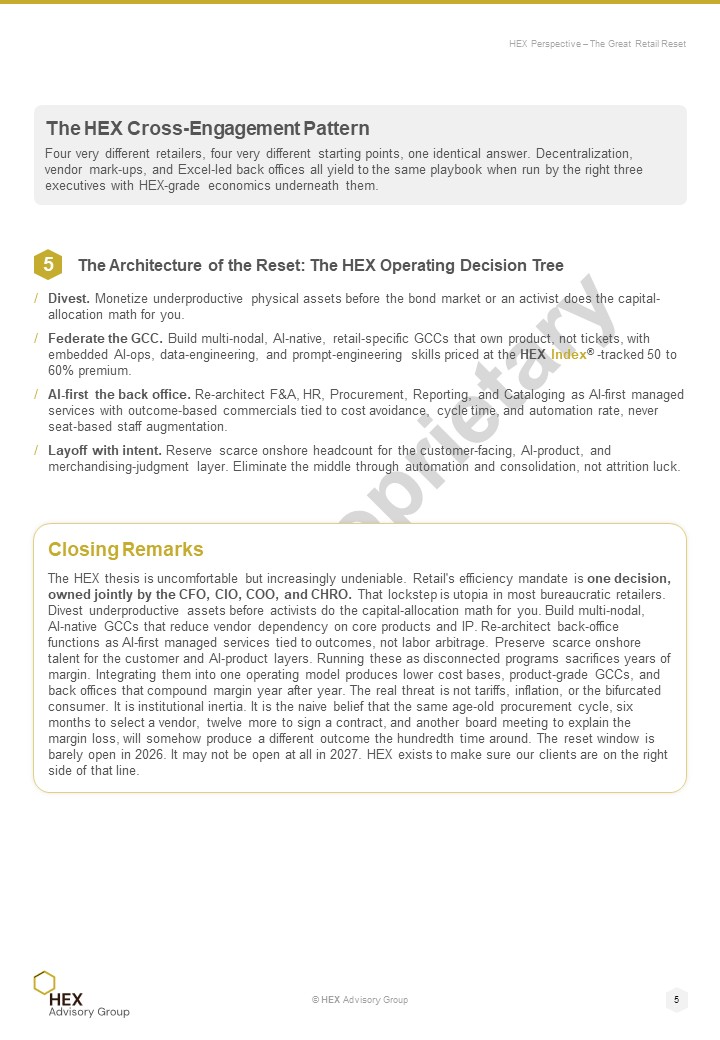
Top-line growth is under pressure. Consumer spending remains constrained. Tariffs, geopolitical instability, and elevated logistics costs continue to squeeze margins.
In this environment, structural efficiency is no longer a cost initiative but a competitive advantage for #Retail.
#USRetail #OperatingModel #Inflation #Efficiency #AI #ConsumerSpending #EfficiencyDeliveredEfficiently
AI writes code at machine speed.
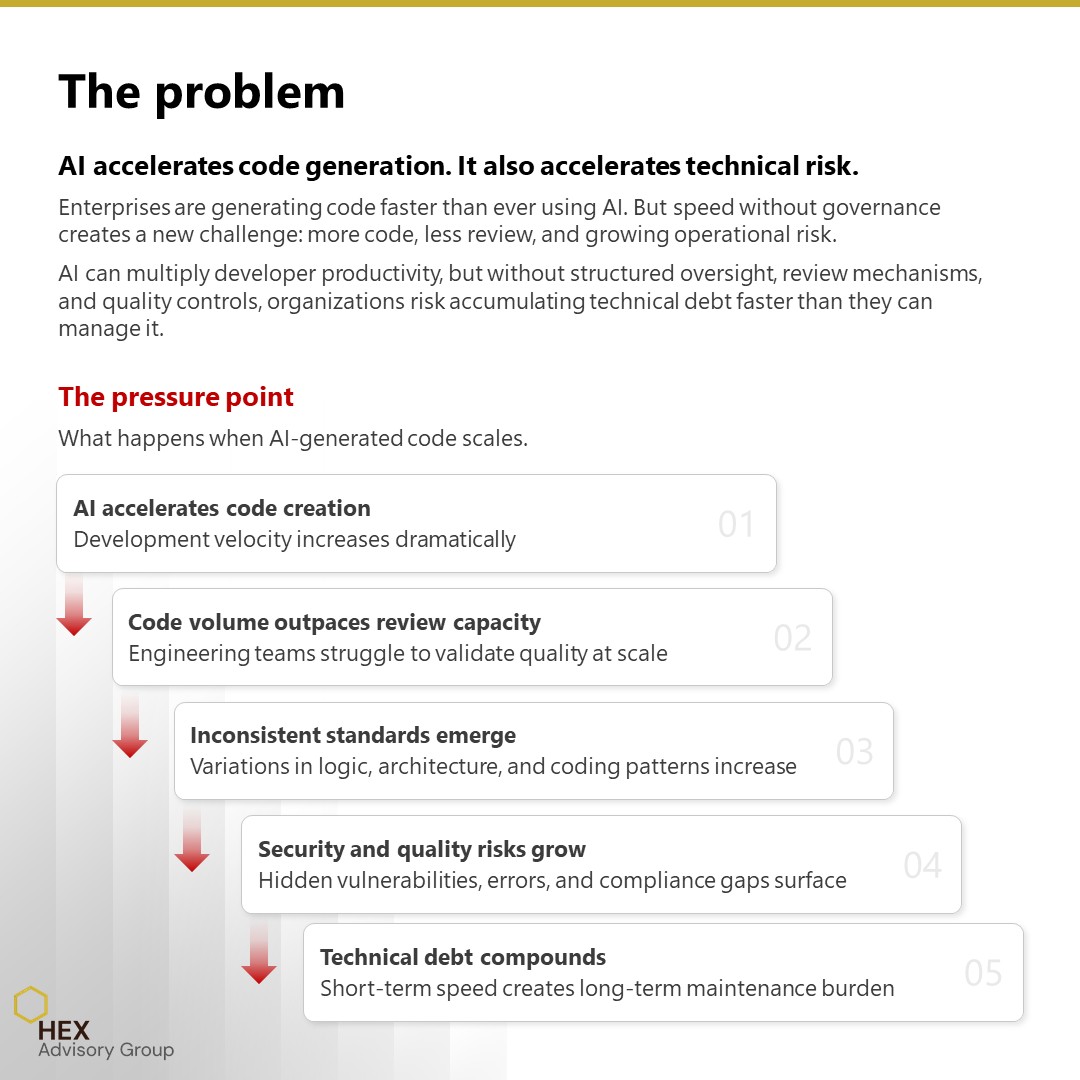
But human review doesn’t scale the same way.
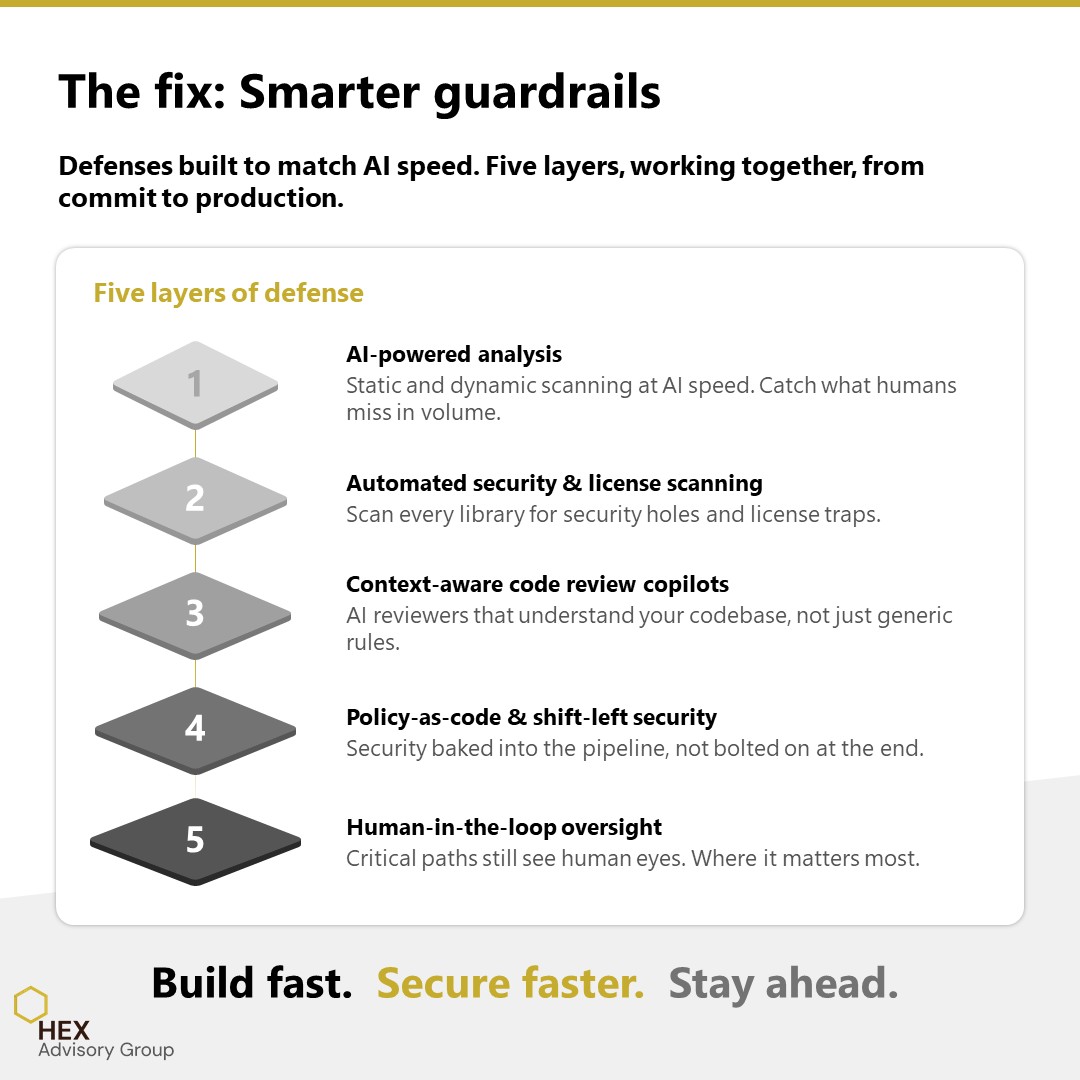
As code velocity accelerates, so do security, compliance, and technical risks. The answer isn’t slowing innovation down. It’s building smarter guardrails that move at AI speed.
Build fast. Secure faster. Stay ahead.
AI CyberSecurityEnterpriseAI SoftwareEngineering HEXAdvisory